There is no right or wrong answer. There is only the answer that resonates with the way you live, think, and feel within your space.
Written by
MOVA Studio · Architecture & Interior Design
An Athens-based studio shaping spaces where architecture, interior design and craft meet — notes from our practice.
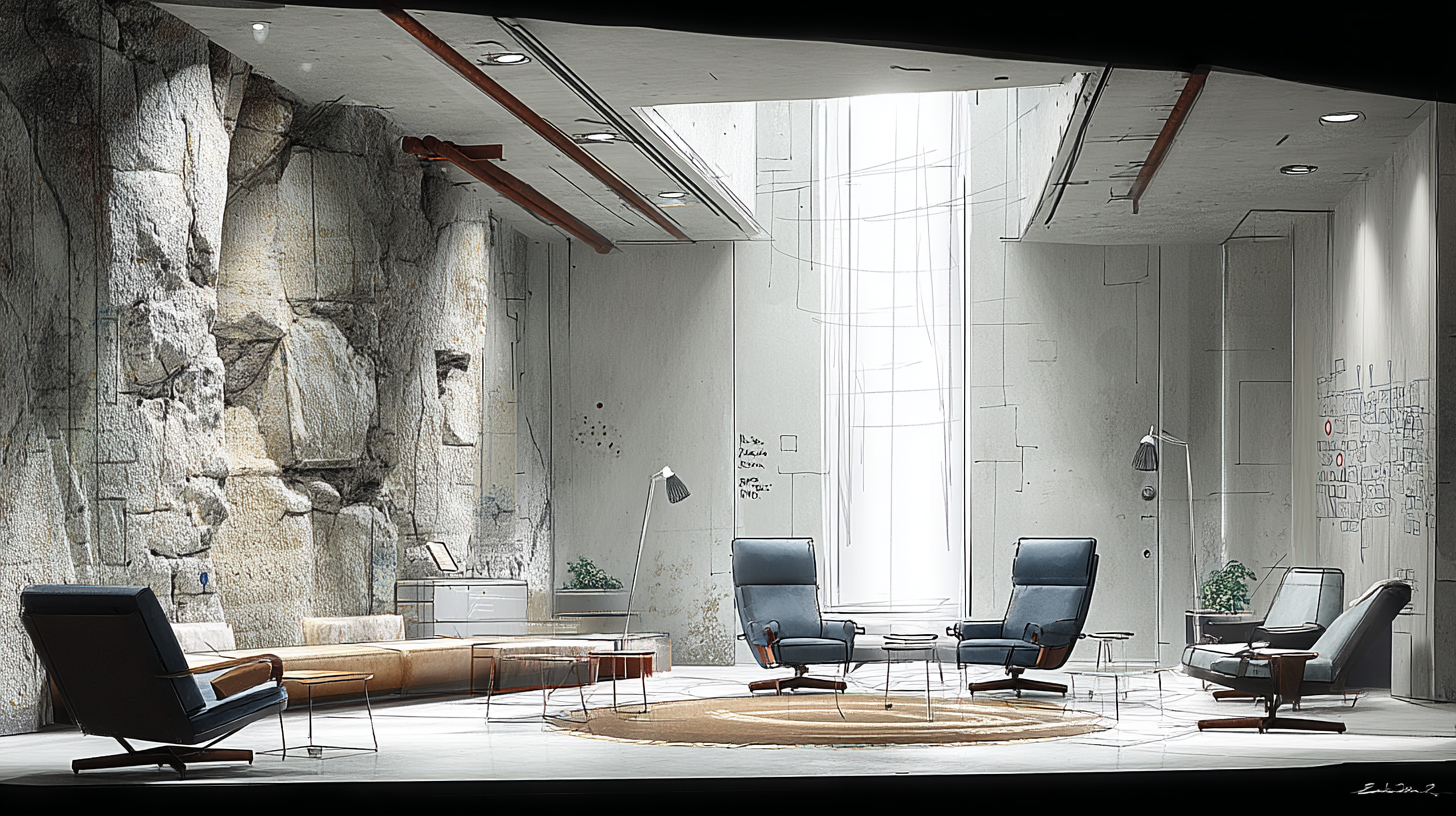
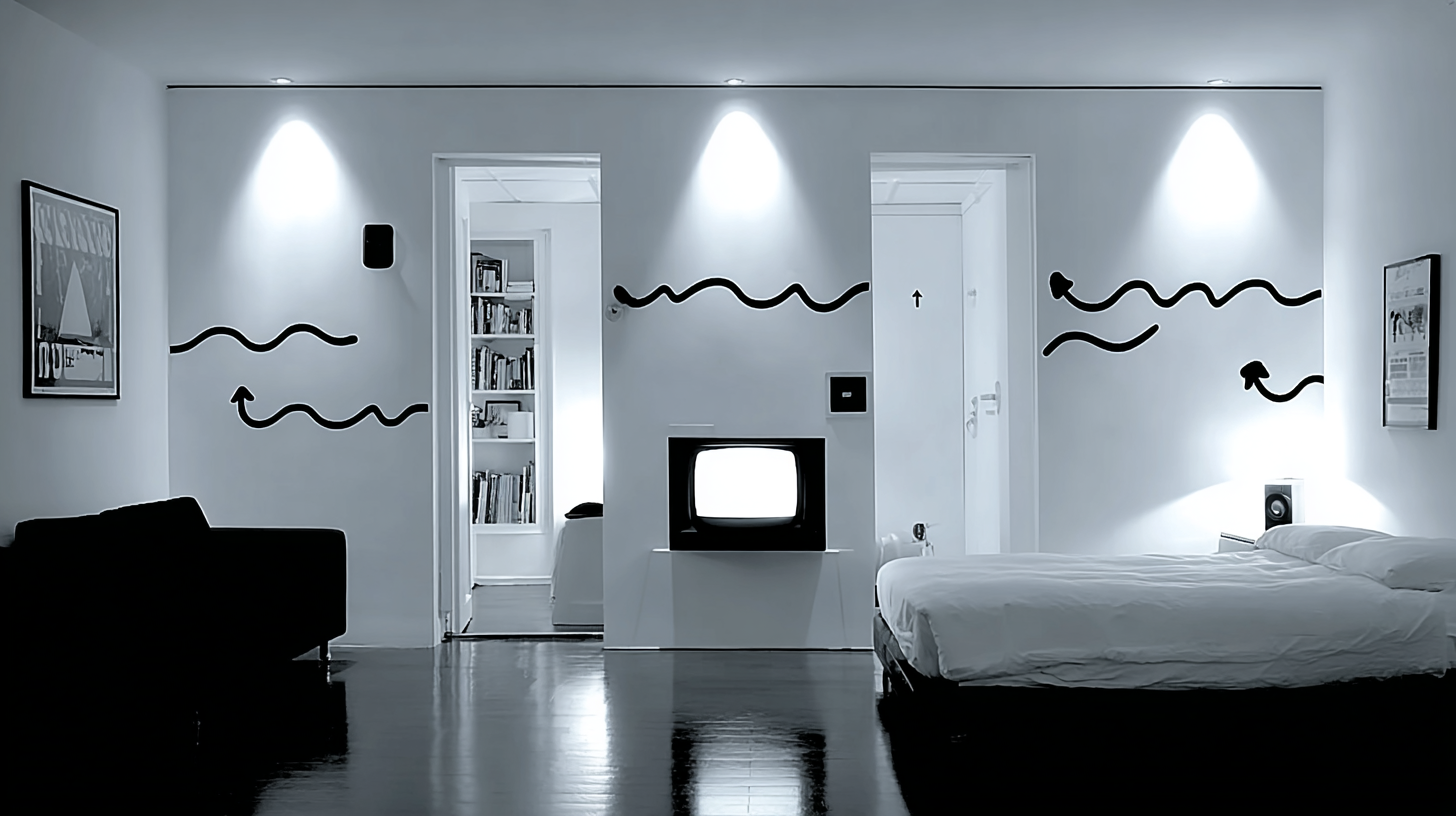
Minimalist aesthetics have dominated interior design in recent years, appearing in both architectural journals and on Instagram. White walls, sleek furniture, storage spaces hidden behind uniform surfaces, an absence of superfluous objects. On the other hand, maximalism is beginning to regain ground, especially in the post-pandemic years, with layers of textiles, bold colors, collections of objects, and spaces that tell stories.
Which is "better"? Neither. The right question is not which style prevails, but which style works for you.
What minimalism really is
Minimalism in interior design does not mean "empty space." It means the deliberate removal of every element that does not serve a functional or aesthetic purpose. Every object, every material, every line exists there for a reason.
The roots of this design philosophy are found in two central traditions. The first is the Bauhaus school (Germany, 1919), whose principle "form follows function" was established by Walter Gropius, Ludwig Mies van der Rohe, and Marcel Breuer, and formed the basis of modernism (Droste, M., Bauhaus 1919–1933, Taschen, 2002). The second is the Japanese aesthetic tradition, particularly the concept of wabi-sabi—the acceptance of imperfection, transience, and essentiality—which deeply influenced 20th-century Western minimalism (Koren, L., Wabi-Sabi: for Artists, Designers, Poets & Philosophers, Imperfect Publishing, 1994).
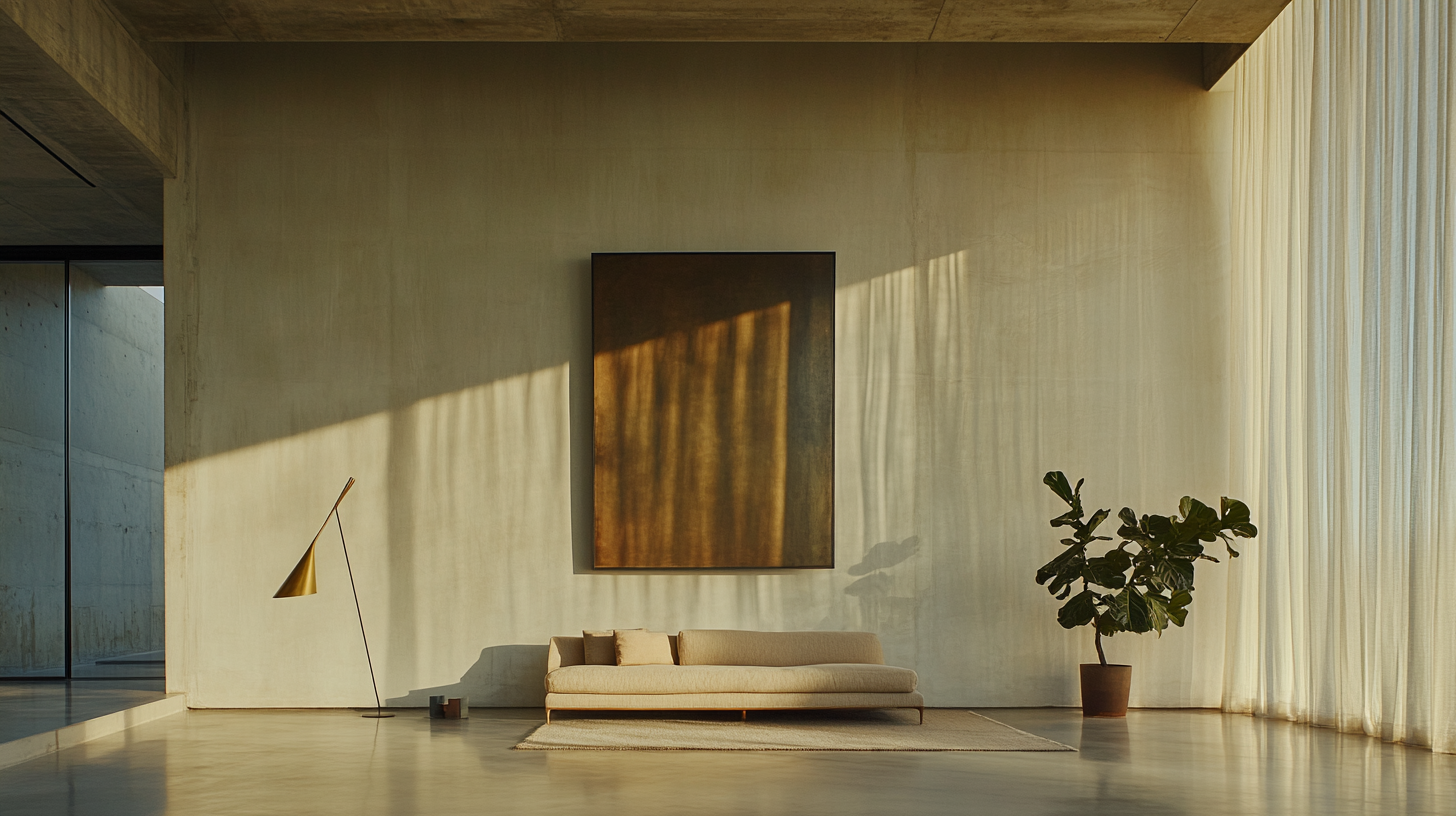
In practice, a minimalist interior is characterized by a limited color palette (neutral tones, earthy colors, monochrome), clean lines in furniture and structures, natural materials (wood, stone, metal, linen) with visible texture, integrated storage that eliminates clutter, and a particular emphasis on natural lighting and "negative space"—the voids that allow the eye to rest.
What maximalism really is
Maximalism is not clutter. It is the deliberate accumulation of layers, meaning, and sensory stimuli within a space. If minimalism subtracts to reveal, maximalism adds to narrate.
The aesthetic origins of maximalism are found in Baroque and Rococo, in British Victorian residences, in Art Deco, in the eclectic tradition of American Bohemian, and in the modern trend of "curated maximalism" that draws from cultural traditions, travels, collectibles, and personal stories (Gupta, K. & Rana, D.P., “Minimalism Vs Maximalism: A Study of Contrasting Interior Design Style,” International Journal of Landscape Planning and Architecture, 10(01), 2024).
A maximalist interior is characterized by a rich color palette (often bold combinations), layers of patterns and fabrics (wallpapers, curtains, cushions, rugs), a mix of eras and styles in furniture and objects, gallery walls, collections, and displays of personal items, as well as dramatic lighting and strong contrasts.
What research says: space and psychology
The relationship between spatial design and our psychological state is not merely intuitive. It is documented, though it must be interpreted with care.
The most frequently cited research in this field is that of Saxbe and Repetti (2010), who analyzed house descriptions from 60 couples (working parents) using linguistic analysis software. Women who used more words related to clutter and unfinished tasks ("stressful home words") showed flatter daily cortisol slopes, a pattern associated with adverse health effects. Conversely, women who described their homes with words like "calm," "nature," and "restful" showed healthier cortisol profiles (Saxbe, D.E. & Repetti, R., “No Place Like Home: Home Tours Correlate with Daily Patterns of Mood and Cortisol,” Personality and Social Psychology Bulletin, 36(1), 71–81, 2010, DOI: 10.1177/0146167209352864).
A key clarification: this research does not prove that clutter causes stress (a causal relationship), but that there is a correlation between how we perceive our space and our physiological stress levels. Furthermore, the finding primarily concerned women in the sample, while men did not show as strong a correlation. This means our reaction to the visual environment is not universal: it depends on personality, our relationship with the space, and our lifestyle.
The practical significance of this finding for interior design is this: it is not the aesthetic itself (minimalism or maximalism) that affects our psychological state, but the sense of control, order, and intentionality within the space. A maximalist space designed with intent, hierarchy, and clear organization can feel just as restful as a minimalist one. A minimalist space that feels empty, clinical, and detached can cause discomfort instead of calm.
Beyond the two extremes: the third way
The most interesting trend in contemporary design lies in neither extreme, but at their point of synthesis. The approach called "essentialism" or "curated minimalism" or "minimalist maximalism" draws structure and discipline from minimalism and warmth, texture, and narrativity from maximalism.
On a practical level, this translates into spaces with clear architectural structure (precise floor plans, unified layout, rational lighting), but with points of intensity: a striking light fixture, a rug with a history, a bookshelf filled with books, a wall of artwork, a handmade ceramic. These "intensity pieces" are not random: they are selected, placed with hierarchy, and in dialogue with the rest of the space.
How to decide what suits you
The choice should not be based on trends or what you see on social media. It must be based on real questions about your lifestyle.
How do you live daily? If you have young children, a dog, and many activities inside the house, a strictly minimalist space can become a source of stress rather than peace, as daily life will constantly battle with the space. Conversely, if you live alone or as a couple with a controlled lifestyle, a lean space may serve you perfectly.
What makes you feel at home? If you need objects around you—books, photos, mementos, a soft knit, a cup on the table—then maximalism (or at least its synthesis) suits you better. If, on the contrary, you need visual silence, clear surfaces, and a sense of "air" to feel calm, minimalism is your natural environment.
How do you react to clutter? If clutter causes you distress, you need ample integrated storage space, regardless of style. This is a design problem, not an aesthetic one.
How much time do you want to spend on maintenance? A minimalist space, despite impressions, is not always low-maintenance: every speck of dust, every misplaced object is visible. A maximalist space hides daily "imperfections" more easily but requires more care in organization.
The MOVA approach
At MOVA, we do not dogmatize in favor of one style. We design spaces that respond to each client's lifestyle, drawing freely from minimalism, maximalism, or their synthesis, depending on the brief. What we do not negotiate is clarity in spatial layout, the quality of materials, the intentionality of every design decision, and technical excellence in construction.
If you aren't sure what suits you, that isn't a problem. It’s the beginning of an interesting conversation.
Sources and References
Saxbe, D.E. & Repetti, R., “No Place Like Home: Home Tours Correlate with Daily Patterns of Mood and Cortisol,” Personality and Social Psychology Bulletin, 36(1), 71–81, 2010, DOI: 10.1177/0146167209352864.
Gupta, K. & Rana, D.P., “Minimalism Vs Maximalism: A Study of Contrasting Interior Design Style,” International Journal of Landscape Planning and Architecture, 10(01), 2024.
Droste, M., Bauhaus 1919–1933, Taschen, Köln, 2002.
Koren, L., Wabi-Sabi: for Artists, Designers, Poets & Philosophers, Imperfect Publishing, Point Reyes, 1994.
McKeown, G., Essentialism: The Disciplined Pursuit of Less, Crown Business, New York, 2014.