Why what you see in magazines was not designed for you, and why that does not mean you do not deserve good design.
Written by
MOVA Studio · Architecture & Interior Design
An Athens-based studio shaping spaces where architecture, interior design and craft meet — notes from our practice.
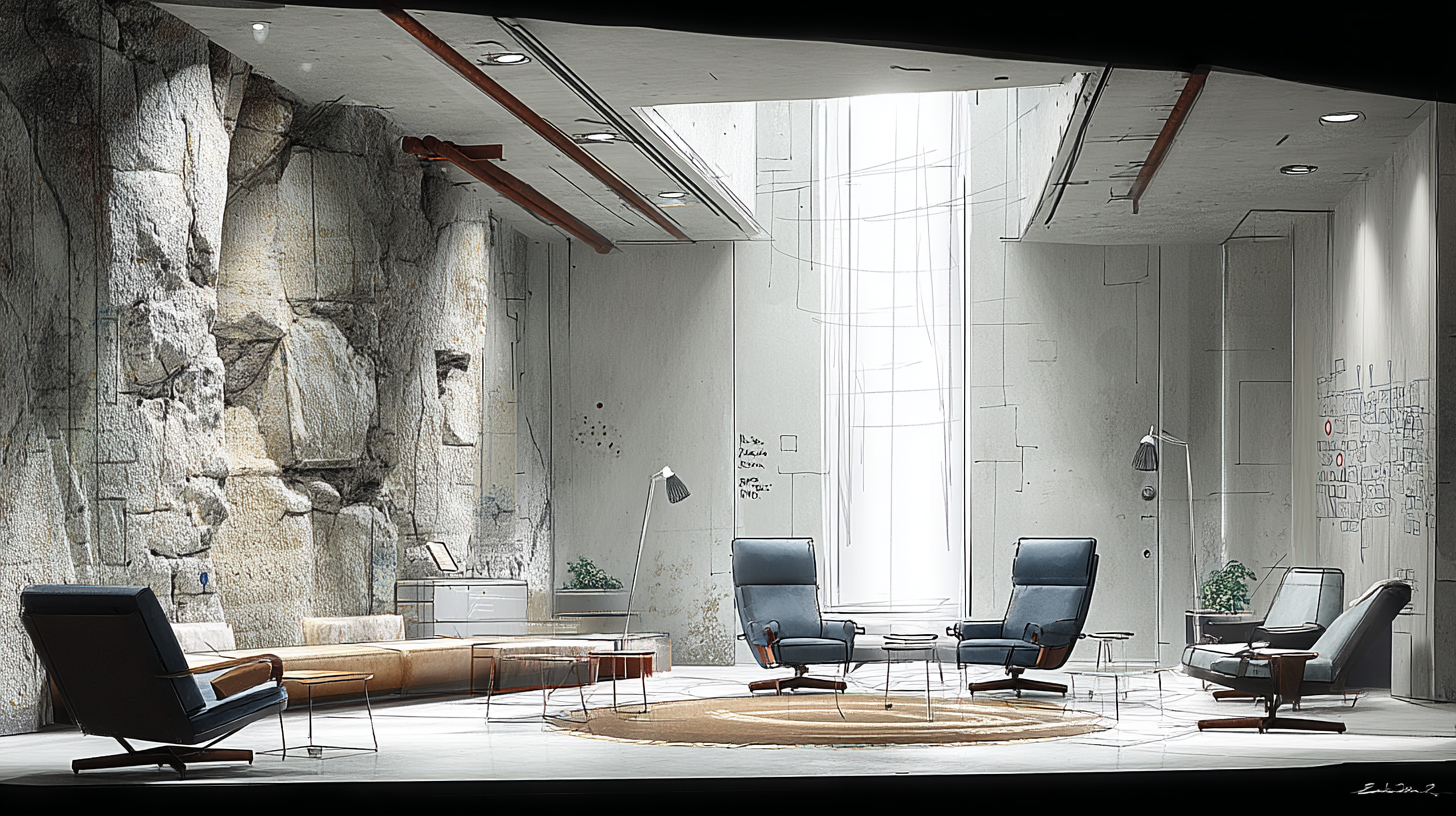
You’re scrolling. A villa in Mykonos with an infinity pool and natural stone walls. A penthouse in Kolonaki featuring a Bulthaup kitchen and walnut flooring. A loft in Milan, photographed at three in the afternoon, when the sun hits the B&B Italia sofa at exactly the right angle. You feel something between admiration and guilt. You save the image. You lock your phone.
What you just saw costs, based on our professional experience with similar projects, between 500,000 and 1,500,000 euros. That is for the fit-out alone. Excluding the real estate.
What no one tells you—not Architectural Digest, not Pinterest, nor the Instagram account with 400,000 followers—is that this design was not conceived for most people who view it. It was designed for the few who can afford it, and published for the many who cannot. This asymmetry is not accidental. It is structural.
The Arithmetic of Illusion
Let’s talk numbers, because numerical data leaves no room for diplomacy.
The average annual salary in Greece amounts to 18,470 euros (OECD, 2024). The median household income stands at 17,500 euros per year (ELSTAT, 2024). The average gross monthly salary is approximately 1,400 euros according to ELSTAT, although calculations based on annual OECD data (€18,470 / 14 salaries) yield about €1,320, as the two sources utilize different methodologies. After deductions, taxes, rent or mortgage payments, utilities, and groceries, the remaining disposable income is, by reasonable estimate, extremely limited. This is not a rhetorical device, but the mathematical result of subtracting the fixed expenses of an average household.
To this, we must add that Greece recorded the largest decrease in real household income per capita in the entire European Union. Between 2004 and 2024, while the European average increased by 22%, Greece recorded a 5% decrease, followed only by Italy at −4% (Eurostat, 2024). Real income in 2024 remains approximately 15% lower than in 2009.
Now let’s look at the cost of a renovation in Greece. According to construction company data and market analysis for 2025, a decent full renovation ranges between 670 and 1,150 euros per square meter. An apartment of 75–80 sq.m., representative of a Greek household residence (Investropa, MyDolceCasa, 2025), requires between 50,000 and 92,000 euros for a complete renovation, excluding design fees. This corresponds to approximately 3 to 5 full years of average income, without any other expenses.
A project like those published in design media, featuring custom kitchens, artisanal materials, imported furniture, and architectural lighting, can easily exceed 2,000 euros per square meter in total fit-out costs (note: market data refers to standard total renovations of €670–1,150/sq.m., without premium materials and custom furniture, which multiply the cost). For a 120 sq.m. home, this means 240,000 euros and up, just for the interiors. The projects you see on the covers of Architectural Digest or Wallpaper*, with budgets often touching or exceeding seven figures, are on a completely different scale.
This, then, is the reason for the title. Million-euro design is not an exaggeration. It is the actual cost scale of the projects that fill our feeds.
The Publicity Machine
But why do we only see these projects? The answer does not lie in aesthetics. It lies in incentives.
Architectural Digest, as the magazine’s own identity states, is synonymous with luxury design and high-end residential projects. This is not a critique; it is a self-description. Architecture and interior design magazines function, as a rule, as showrooms for luxury residences, celebrity homes, and high-end decor trends. The same logic governs Wallpaper*, Elle Decor, The World of Interiors, and Greek design publications.
This does not happen by coincidence. Published projects function simultaneously as editorial content and as "dolce vita" marketing. Every photograph of a luxury home is also an advertisement for the designer, the contractor, the furniture supplier, the photographer, the brand. The cycle is self-sustaining: expensive projects have better photography (because the client pays for the photographer too), good photography is published more easily, and publication brings new clients requesting something similar. A designer working with a budget of 15,000 euros in an apartment in Nikaia does not have a budget for professional photography. Without photography, there is no publication. And without publication, there is no brand recognition.
The result: the average Greek scrolls through a reality that does not belong to them, thinking this is "the right design." This is where, in our view, a sense of inadequacy is born: that their own space is not good enough, that they themselves are not "design literate," that a good home is a privilege of a class they do not belong to.
The Social Dimension: Design as a Class Marker
This illusion is not innocent. In our opinion, it functions as a mechanism of social hierarchy.
When design media exclusively publish high-budget projects, they convey a specific message: good taste is expensive. Beauty is a luxury. Aesthetic quality is a function of financial capability. This is an ideological message, not a design truth.
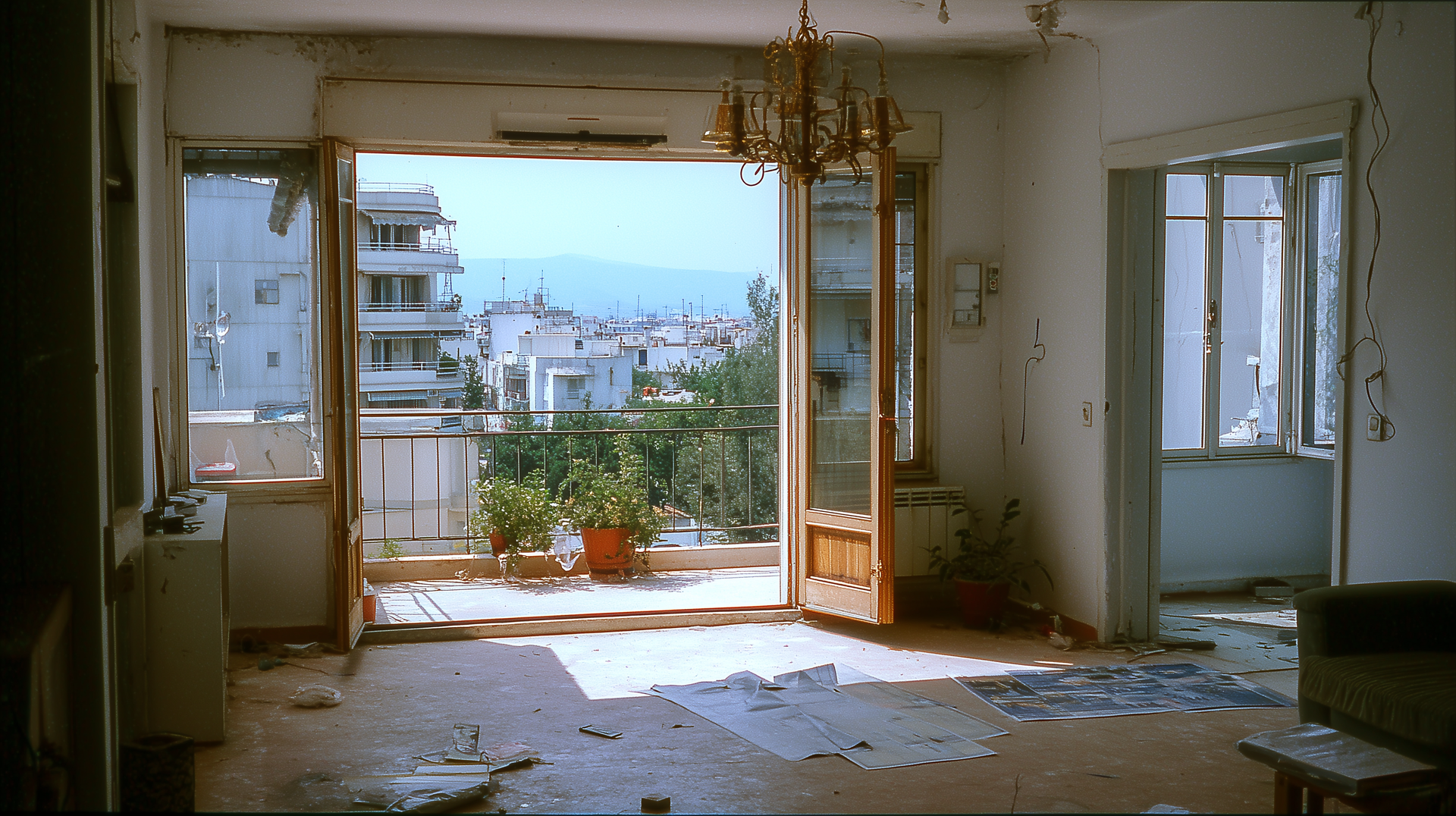
In Greece, where home ownership stands at approximately 69.4% (Eurostat, EU SILC 2025), the majority of people live in properties purchased decades ago, built with modest materials, and never substantially renovated. These homes—the homes of the real Greece—will never be published in any design magazine. Not because they cannot be made better, but because they do not serve the industry of aspirational living.
There is a deep contradiction here. Design media present themselves as sources of inspiration—tools for the democratization of aesthetics. In practice, they do the opposite: they reinforce the gap between the feasible and the desirable, creating a permanent sense of inadequacy in people who, objectively, cannot approach these budgets.
The Philosophical Objection: What "Good Design" Means
Let’s address the core question. What is good design?
Victor Papanek, in his book Design for the Real World (1971)—one of the most widely read design books ever written, translated into over 20 languages—begins with a phrase that remains relevant half a century later: there are professions more harmful than industrial design, but very few. Papanek argued that design must serve real human needs, be socially responsible, environmentally sustainable, and accessible. The philosophy of social design, the critique of consumerism, and the focus on sustainability remain topical and dominate the agendas of design schools today (Clarke, A.J., Victor Papanek: Designer for the Real World, MIT Press, 2021).
Dieter Rams, the designer who defined modern industrial aesthetics through his work at Braun, formulated his ten principles of good design in the late 1970s. None of them reference cost as a criterion for quality. On the contrary, Rams emphasized that good design is that which makes a product useful, does not burden the user with unnecessary elements, and stands the test of time. The principle of "less, but better" (weniger, aber besser) is the exact opposite of the "more and more expensive" promoted by design media (Rams, D., Weniger, aber besser / Less but Better, Jo Klatt Design, 1995).
And IKEA, whatever one may think of it, has codified a principle worth serious consideration: "Democratic Design," the position that good design combines form, function, quality, sustainability, and low price. If one of these is missing, it is not democratic design. The premise is clear: no one should be excluded from good design due to financial inability.
What This Means in Practice
A well-designed home does not need imported Calacatta marble. It needs proper spatial organization: circulation flows that do not obstruct, storage spaces that make sense, and natural light that is harvested rather than blocked.
A well-designed bathroom does not need Gessi faucets. It needs proper waterproofing, ergonomic equipment placement, ventilation that prevents mold, and materials that are easy to clean and durable over time.
A well-designed living room does not need an 8,000-euro sofa. It needs correct proportions, a color scheme that works, lighting that adapts to activities (reading, relaxing, conversing), and acoustic comfort.
None of this requires a million euros. It requires thought. It requires methodology. It requires a designer who knows what they are doing and does not rely on the client’s budget as a substitute for skill.
The Real Challenge
Designing an impressive house with a 500,000-euro budget is not easy, but it is also not the hardest test. The real test is to design an 80 sq.m. apartment in a 1975 building with a 25,000-euro budget, and make it function correctly, breathe, and feel like a home.
This skill—the ability to create value within finite resources—is what makes a designer great. Not the ability to spend someone else’s money on beautiful objects.
Papanek put it more sharply: design, by definition, is a problem-solving activity, and the cancerous growth of the creator expressing themselves egocentrically at the consumer's expense has spread from the arts to manufacturing and finally to design (Papanek, 1985, p.38). If a designer needs a million to solve a problem, perhaps they do not truly understand the problem.
A Message for the Reader
If your home doesn’t look like what you see on Pinterest, it doesn’t mean you live in a bad home. It means you live in a real home, within a real economy, with real constraints. And these constraints are not a reason for shame. They are the starting point of every serious design endeavor.
Good design is not measured in euros. It is measured by whether your space functions, whether it makes you feel comfortable, and whether it serves your actual needs. It is measured by whether, when you walk into your home, you feel that it is yours.
No magazine will tell you this. Because this doesn't sell. But this is the truth.
Bibliographic References:
OECD (2025). Average annual wages in Greece from 1995 to 2024. Statista.
ELSTAT (2024). Household Income and Living Conditions Survey (EU SILC), reference income data 2023.
Eurostat (2024). Real gross disposable income of households per capita, index 2008=100.
Papanek, V. (1971). Design for the Real World: Human Ecology and Social Change. Pantheon Books. (2nd edition 1985, trans. in 22+ languages according to publisher MIT Press).
Clarke, A.J. (2021). Victor Papanek: Designer for the Real World. MIT Press.
Rams, D. (1995). Weniger, aber besser / Less but Better. Jo Klatt Design + Design Verlag, Hamburg. (Revised edition: Gestalten Verlag, 2014).
IKEA. Democratic Design: Form, Function, Quality, Sustainability, Low Price. IKEA Museum, Älmhult.
Eurostat, EU SILC (2025). Distribution of population by tenure status, Greece: 69.4% owner-occupation.
Investropa (2026). Housing Prices in Greece. investropa.com.
wage.is (2026). Average Salary & Minimum Wage in Greece. Source: ELSTAT (2025).