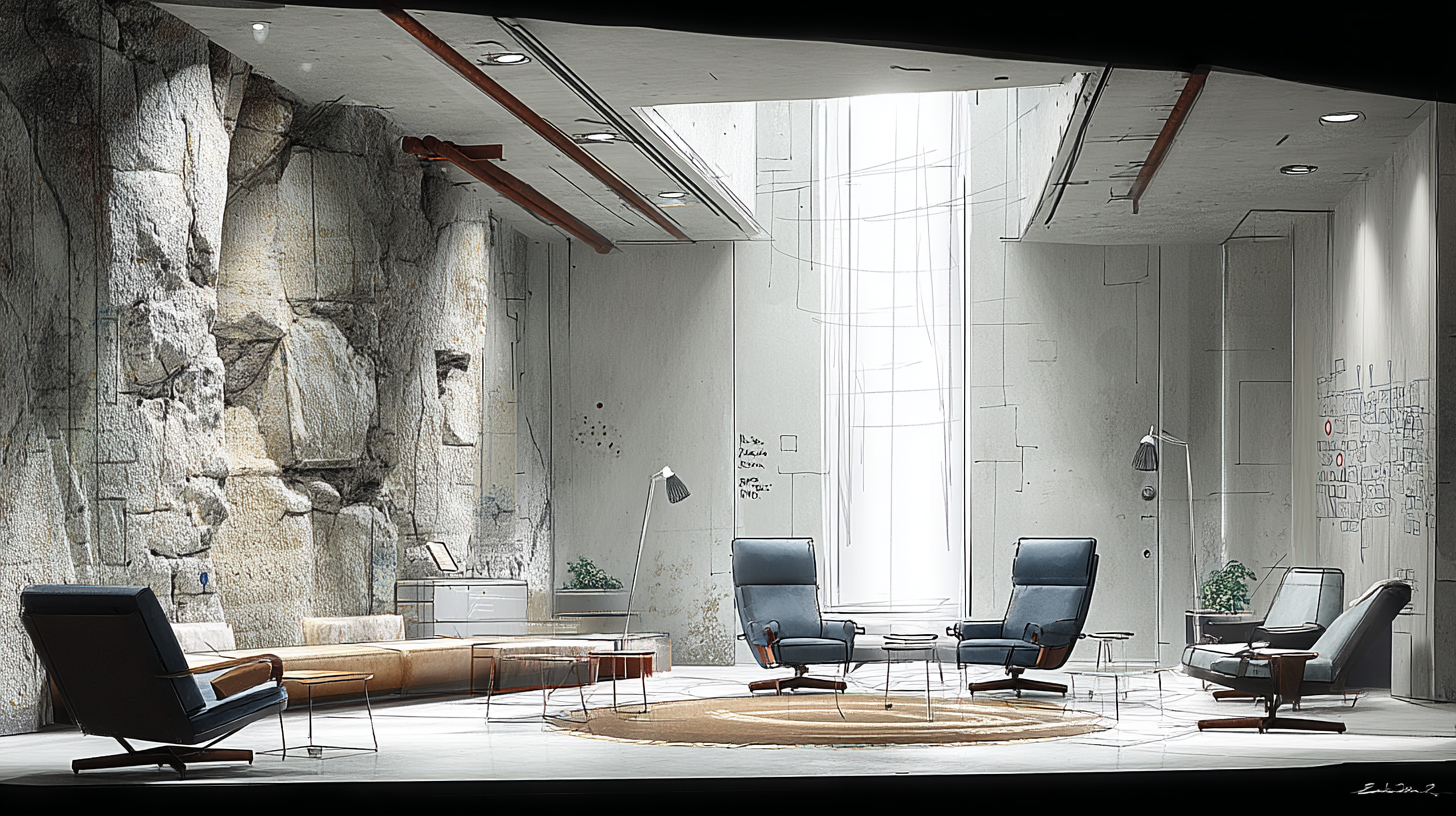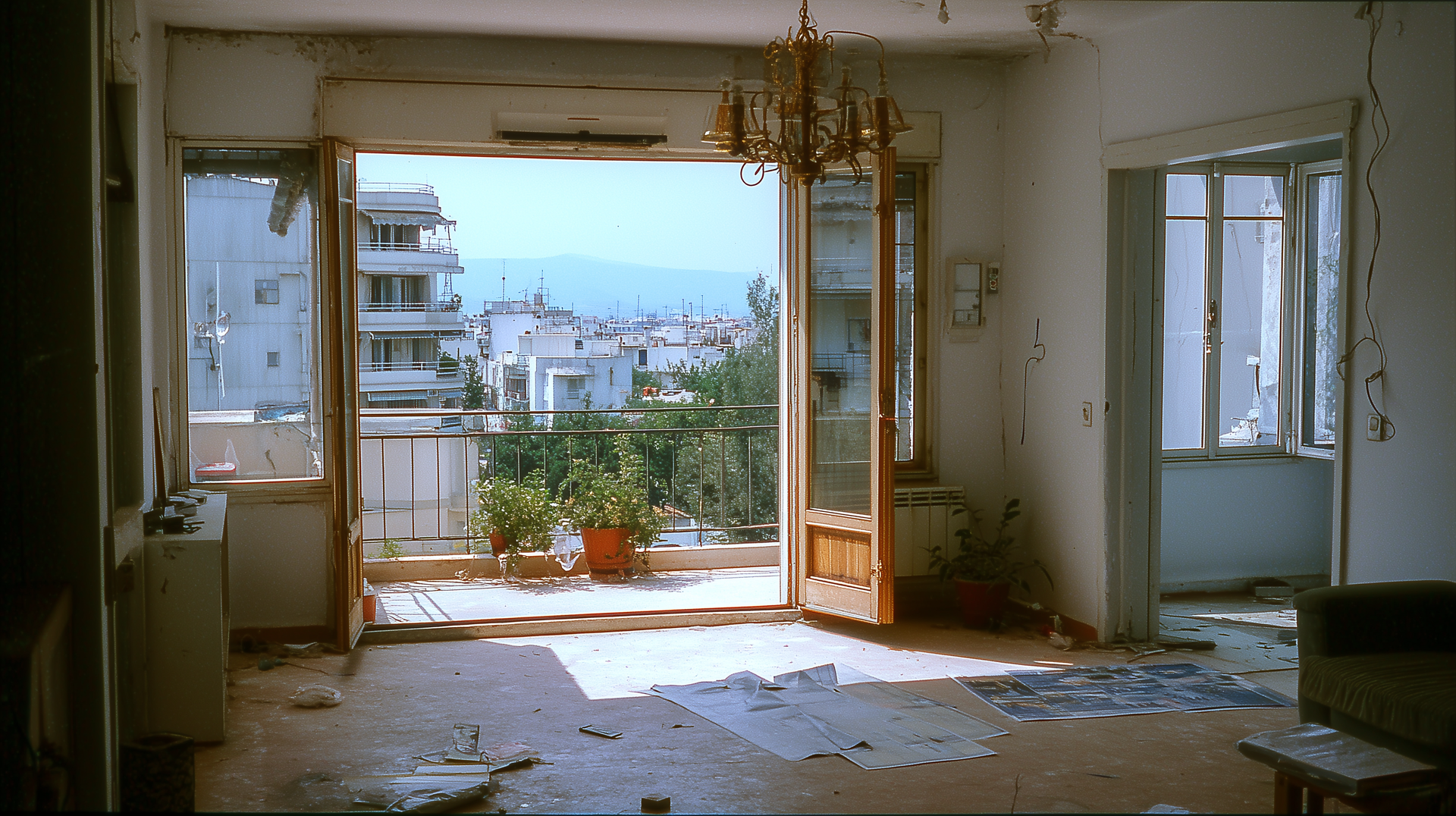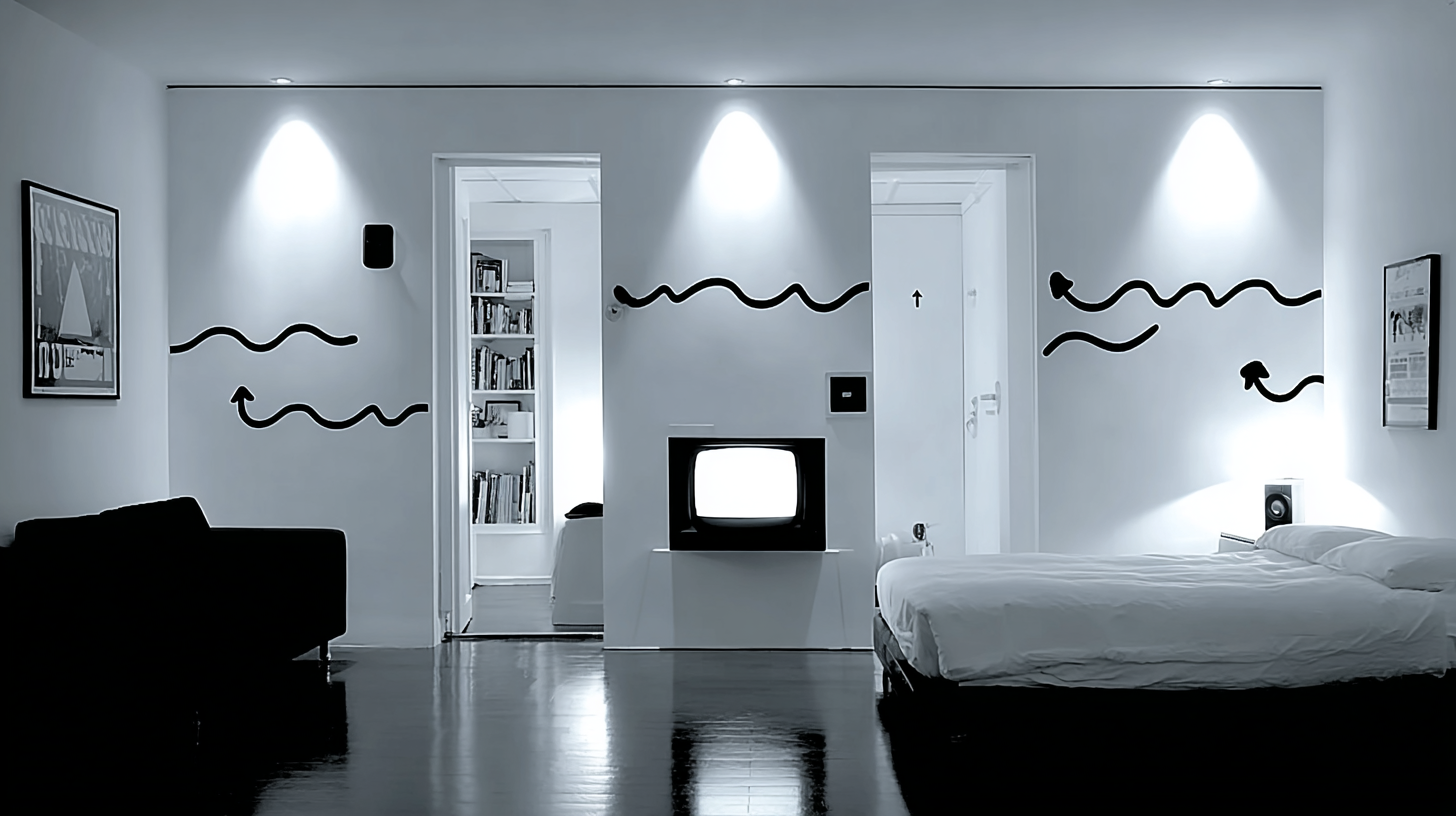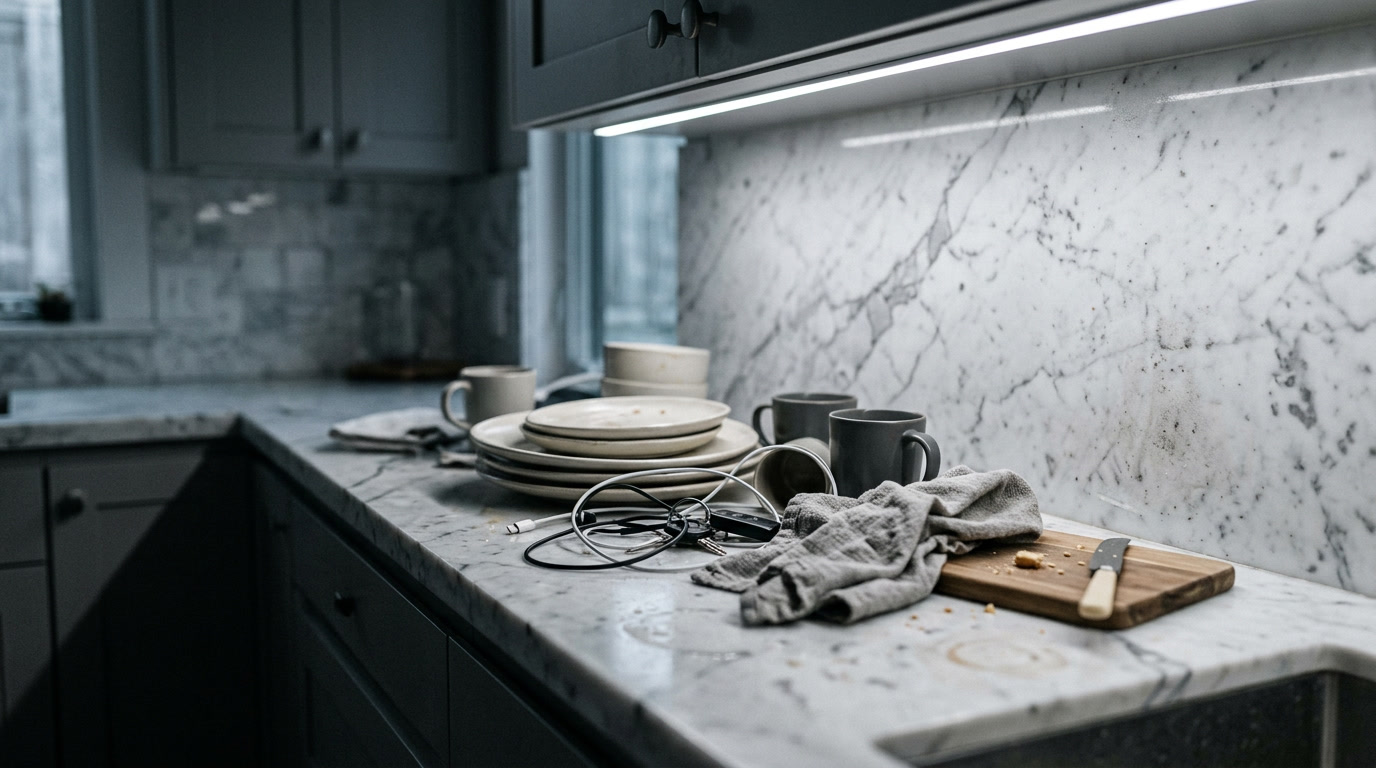
It is Sunday night. You don't have to work early tomorrow, you haven’t argued with anyone, there is no reason to be tense. And yet, sitting on your sofa, something weighs on you—subtle but persistent, like a noise you cannot quite pinpoint. Have you ever felt this?
Written by
MOVA Studio · Architecture & Interior Design
An Athens-based studio shaping spaces where architecture, interior design and craft meet — notes from our practice.
The space speaks to your brain, even when you aren't paying attention
The field of neuroarchitecture studies the way in which the built environment affects our neurological and psychological state. Space is not a neutral backdrop. It is an active factor that influences cortisol levels, the ability to concentrate, and even sleep. And the stressors hidden within a home are more numerous, and more documented, than most of us imagine.
What exactly in the home can act as a stressor?
Clutter
You don't need to live in chaos to be affected. A kitchen counter with three more items than you need, a bedroom where clothes "sit" on a chair, or a desk with scattered papers is enough. Every object out of place functions as a small, unfinished task in your brain—a so-called “open loop” that consumes mental energy even during rest.
Research by Saxbe & Repetti (2010), “No Place Like Home: Home Tours Correlate With Daily Patterns of Mood and Cortisol”, Personality and Social Psychology Bulletin, documented a direct correlation between the language residents use to describe their home as “cluttered” or “messy” and increased cortisol levels during the day. This is not a subjective impression. It is a measurable biological response.
Lighting
Light is perhaps the most underrated element of design. Research by Gooley et al. (2011), “Exposure to Room Light before Bedtime Suppresses Melatonin Onset and Shortens Melatonin Duration in Humans”, Journal of Clinical Endocrinology & Metabolism, showed that exposure to artificial room light before bedtime suppresses melatonin production by an average of 71.4% and delays its physiological onset. If your evening space has cool, intense lighting, your brain literally does not receive the signal to calm down.
Noise
Of all the factors affecting our psychological state at home, noise is perhaps the most persistent, precisely because it has no off switch. You cannot close your ears as you close your eyes.
Basner et al. (2014), in a review published in The Lancet (“Auditory and non-auditory effects of noise on health”), documented that exposure to environmental noise is linked to sleep disturbances, increased cardiovascular risk, reduced cognitive performance, and psychological stress. The critical finding is that many of these effects occur even when the noise is not loud enough to wake the sleeper or consciously disrupt their concentration. The brain remains in a state of unconscious alertness.
The World Health Organization, in its Environmental Noise Guidelines for the European Region (2018), sets the limit for traffic noise at 53 dB during the day and 45 dB at night. These levels are systematically exceeded in high-traffic urban areas. Inside the home, poor sound insulation and insufficient sound absorption from hard surfaces keep the brain in a state of constant, low-intensity arousal through the continuous processing of auditory stimuli. The acoustic design of a space is not a luxury. It is a health parameter.
The city charges you before you even open your door
There is a dimension rarely discussed when we talk about the home as a place of calm: the home does not exist in a vacuum. It is embedded in an urban environment that exerts its own constant pressure on the resident, long before they reach their doorstep.
Lederbogen et al. (2011), in a study published in Nature (“City living and urban upbringing affect neural social stress processing in humans”), used functional brain imaging (fMRI) and showed that urban living is associated with increased activation of the amygdala—the brain region that processes threat and anxiety—during socially stressful situations. This is not a subjective impression. It is a neurologically detectable difference.
The resident of a dense urban area arrives home already "charged" from exposure to traffic, noise, human density, and unpredictable social stimuli. In this context, the home cannot simply be “neutral.” It must actively compensate. This means that every parameter of the interior space, from temperature to lighting and acoustics, gains additional weight when the resident arrives already burdened.
Temperature
Home temperature does not only affect comfort. It directly affects sleep physiology and, by extension, the quality of the following day. Kräuchi, Cajochen, Werth & Wirz-Justice (1999), in Nature (“Warm feet promote the rapid onset of sleep”), showed that vasodilation in the extremities, which facilitates heat loss from the core, is one of the most reliable predictors of rapid sleep onset.
In a critical review published in the Journal of Physiological Anthropology, Okamoto-Mizuno & Mizuno (2012) (“Effects of thermal environment on sleep and circadian rhythm”) concluded that environmental temperatures outside the 17–28°C range measurably affect sleep architecture, and that the optimal range for sleep for most adults is between 17–19°C. A bedroom that overheats at night, even if it feels “warm and cozy,” physiologically prevents the brain from entering deeper sleep stages.
The air you breathe
In enclosed, poorly ventilated rooms, CO₂ levels steadily increase from human presence. You don't need to be in a closed office with many people to be affected. Even a poorly ventilated bedroom or living room is enough.
Allen et al. (2016), in a controlled study by the Harvard T.H. Chan School of Public Health published in Environmental Health Perspectives (“Associations of cognitive function scores with carbon dioxide, ventilation, and volatile organic compound exposures in office workers”), measured that at CO₂ levels of approximately 1,000 ppm—typical for enclosed, poorly ventilated spaces—cognitive performance decreased by an average of 15%. At levels of 2,500 ppm, the reduction reached nearly 50% in core functions such as decision-making and strategic thinking. If you feel sluggish or have difficulty concentrating without an obvious cause, indoor air is one of the first factors worth checking.
Two additional factors are worth mentioning, without overstating them beyond what the evidence supports. Indoor humidity below 30% is linked to respiratory and mucosal irritation, according to WHO guidelines (WHO Guidelines for Indoor Air Quality: Dampness and Mould, 2009), while humidity above 60% creates conditions for mold growth with documented impacts on respiratory health. Volatile organic compounds (VOCs) from paints, furnishings, and cleaners are emitted at levels 2 to 5 times higher indoors than outdoors, according to the US Environmental Protection Agency (EPA, Introduction to Indoor Air Quality), with specific compounds linked to headaches, fatigue, and irritation.
The absence of nature
The term biophilic design describes the integration of natural elements into space (plants, natural materials, natural light, organic forms). Bringslimark, Hartig & Patil (2009), in a critical review of experimental literature published in the Journal of Environmental Psychology (“The Psychological Benefits of Indoor Plants: A Critical Review of the Experimental Literature”), concluded that the presence of indoor plants is correlated with reduced stress and improved mood, with the strongest effects seen in work and hospital environments. It is not a trend. It is a biological necessity.
The color of the walls
Elliot & Maier (2014), in a review published in the Annual Review of Psychology (“Color Psychology: Effects of Perceiving Color on Psychological Functioning in Humans”), document that exposure to color triggers measurable psychological and physiological responses, which depend on context, intensity, saturation, and individual experience. This means that simplistic recipes like “blue for calm, red for energy” do not reflect the true complexity. What the literature supports most consistently is that colors of high saturation and intensity in spaces of prolonged presence are associated with increased neurological arousal, while low-saturation, medium-brightness colors tend to support a state of calm. This is a documented direction, not a universal rule.
What you see from your window
This is one of the most iconic studies in the history of environmental psychology. Ulrich (1984), in a study published in Science (“View through a window may influence recovery from surgery”), monitored patients who had undergone the same surgery in identical rooms, with only one difference: some had a view of tree foliage, others of a wall. Patients with a view of nature recovered faster, required fewer analgesics, and received significantly fewer negative notes from nursing staff. What you see effortlessly from your daily space is not a random aesthetic detail. It is a restorative factor.
The sense of control in your space
There is something more abstract but equally well-documented: the perceived lack of control in the domestic environment as a source of chronic stress. Evans (2006), in a review published in the Annual Review of Psychology (“Child development and the physical environment”), documents that density, poor organization, and a lack of personal space are linked to chronic psychological stress and reduced recovery capacity. The underlying mechanisms—controllability, privacy, the sense of a secure base—are psychological needs that apply at all ages. If you feel that your house is “chasing you,” that you don't have a spot that is truly yours and quiet, this is not an exaggeration. It is a recognized psychological impact of a space that does not support a sense of control and safety.
The lack of visual hierarchy
A space where everything has the same visual “weight” does not give the brain points of reference and rest. The gaze rests nowhere. This is a design principle with a psychological background, presented as such rather than a finding of a single clinical study.
What makes a space truly restful?
The scientific findings presented above converge on several common parameters. Order without sterility, layered lighting that adapts to the needs of day and night, natural materials that sensory activate a sense of warmth, regulated temperature, and sufficient air exchange compose an environment that supports its resident. To these are added, as design principles with a psychological background, the conscious balance of fullness and void and a visual hierarchy that allows the gaze and the brain to rest. A space that ignores these parameters does not simply fail to relax its inhabitant. It fails to perform its most fundamental function: to be a sanctuary.
First step: observe before changing anything
Sit in each room of your house for five minutes without a screen. How do you feel? Calm? Stressed? Neutral in a way that doesn't nourish you?
Your answers are already valuable information. And often, simply naming them is enough to start seeing your space with a different eye—not as a backdrop, but as a factor that actively affects the way you live.
A space that supports you is not a matter of budget or square footage. It is a matter of understanding: of the way you live, the moments you get tired, and the choices that have a real, long-term impact on your daily life. This is exactly the work we do at MOVA. Not just to make spaces beautiful, but to make them work for you, with precision and meaning.