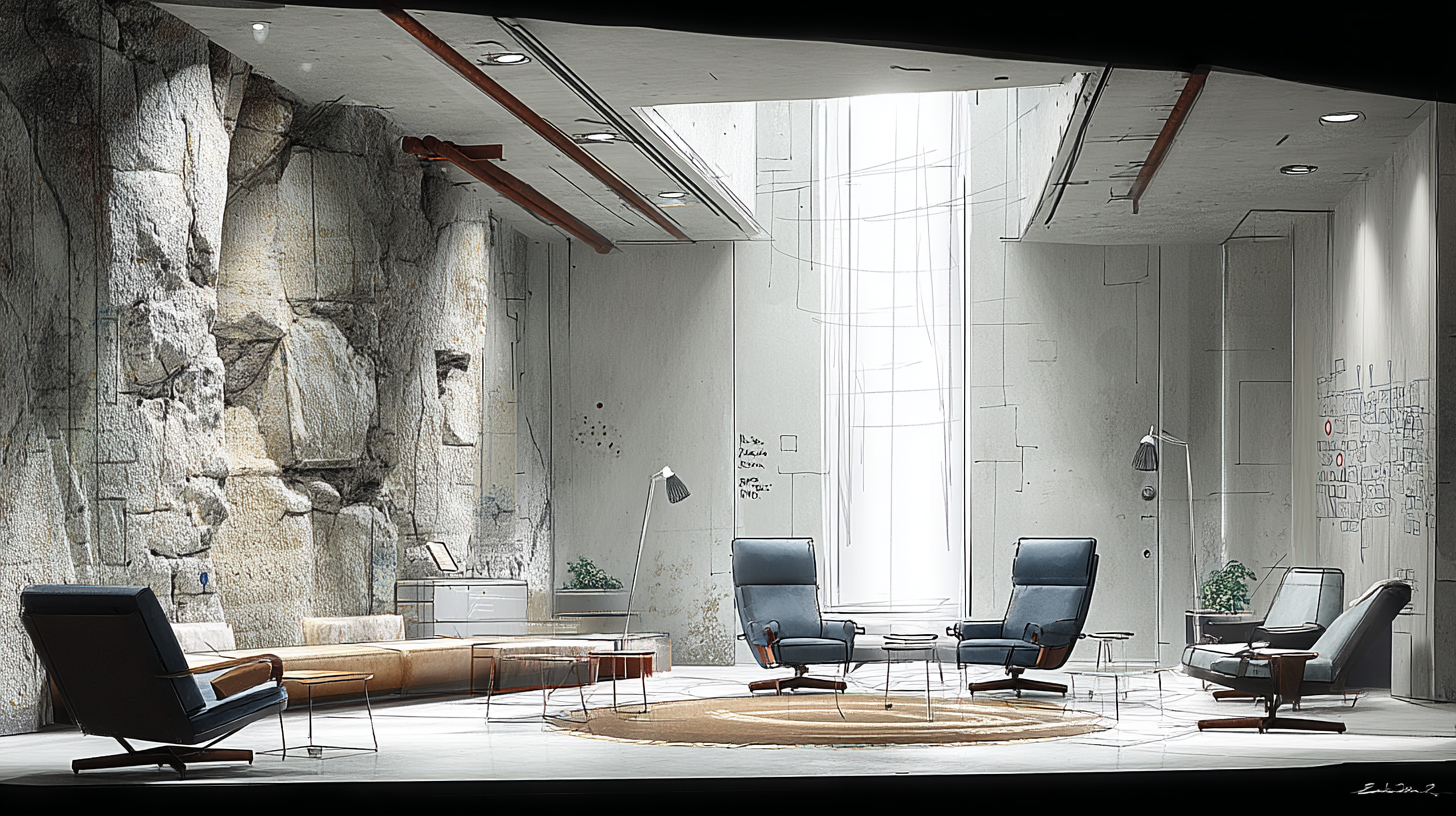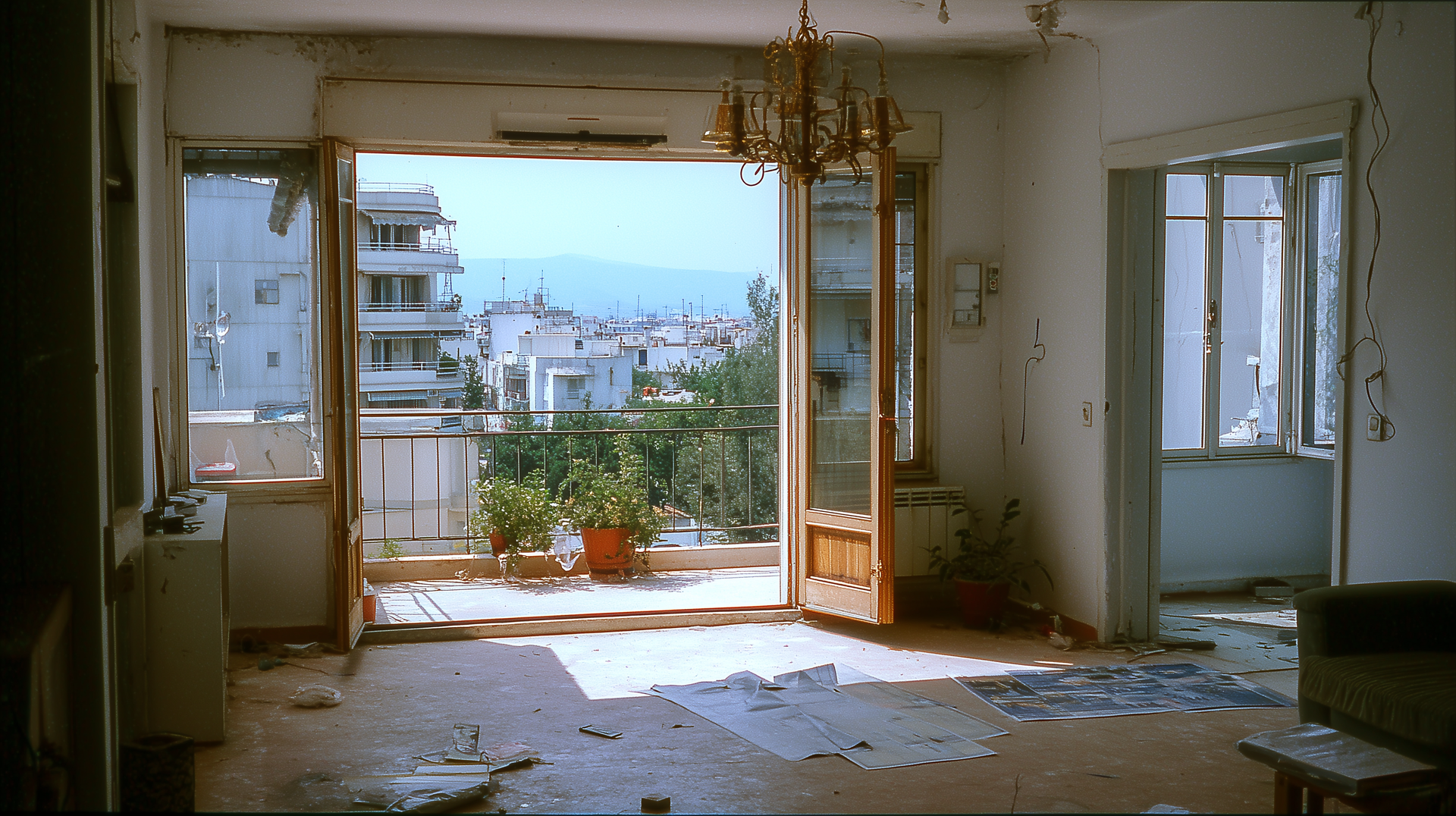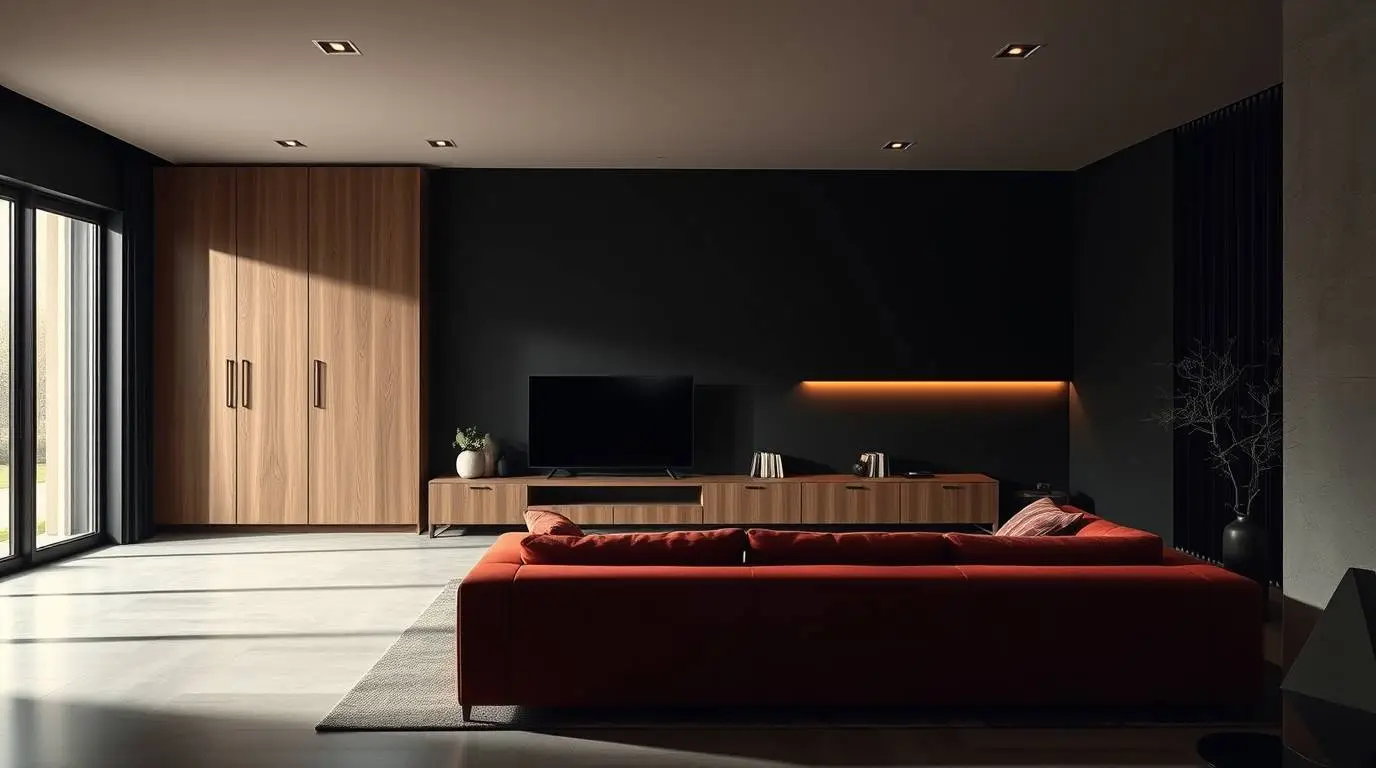
It is not something spectacular — a slight shift, an almost imperceptible grey. There, the space reveals its true character. Whatever existed only as a surface, gains depth. Color ceases to be a design choice and becomes a state of mind.
Written by
MOVA Studio · Architecture & Interior Design
An Athens-based studio shaping spaces where architecture, interior design and craft meet — notes from our practice.
As the years pass, I am becoming increasingly convinced that color possesses an ethic. Not in the sense of good or evil, but as a stance of responsibility toward what we create. Every tone we select is a whisper to the person who will inhabit the space. It can soothe them or unsettle them.
Color is not a surface
In school, we were taught to design with lines. After a while, I realized that space is defined by light and shadow, not by outlines. Color is the language of this encounter. There is no "beige wall" or "black door"; there is only the way light falls upon them.
When we work at MOVA, we never start with the palette. We start with the light of the place. The morning light of Athens is not the same as the light of a hall in Thessaloniki or a room on an island. Color is not selected; it emerges.
The ethics of harmony
We live in an era of oversaturation. The screens around us scream with color, as if constantly needing to grab our attention. Amidst this chaos, the silence of a neutral tone can be an act of resistance.
I do not believe in spectacular interiors; I believe in spaces where you can remain without feeling fatigued.
The right color makes no noise — it regulates the rhythm of the space. It is the background upon which life unfolds. It is not the intention; it is the consequence.
Color as an act of consciousness
Sanzo Wada used to say that every hue exists only in its relationship with others. People are the same. Harmony is never self-evident — it is built with measure and care. When I work with palettes, I think of rhythm, not contrast. I want to feel that the space breathes, that the eye can find rest.
Ultimately, this is the meaning of architecture: to transform matter into experience. And color is the quietest, yet most honest, way to achieve this.
The MOVA philosophy
For us, color is part of a broader philosophy: Form, Function, Flow. We do not view it as a decorative element, but as energy that unifies.
A palette of three or four shades is enough — provided there is rhythm, breath, and silence.
The essence lies in simplicity:
stripping the space of the redundant,
letting the light color the rest.
Color, ultimately, is not a matter of aesthetics. It is a matter of sensitivity.
And sensitivity is the most difficult, yet most human, form of perfection.