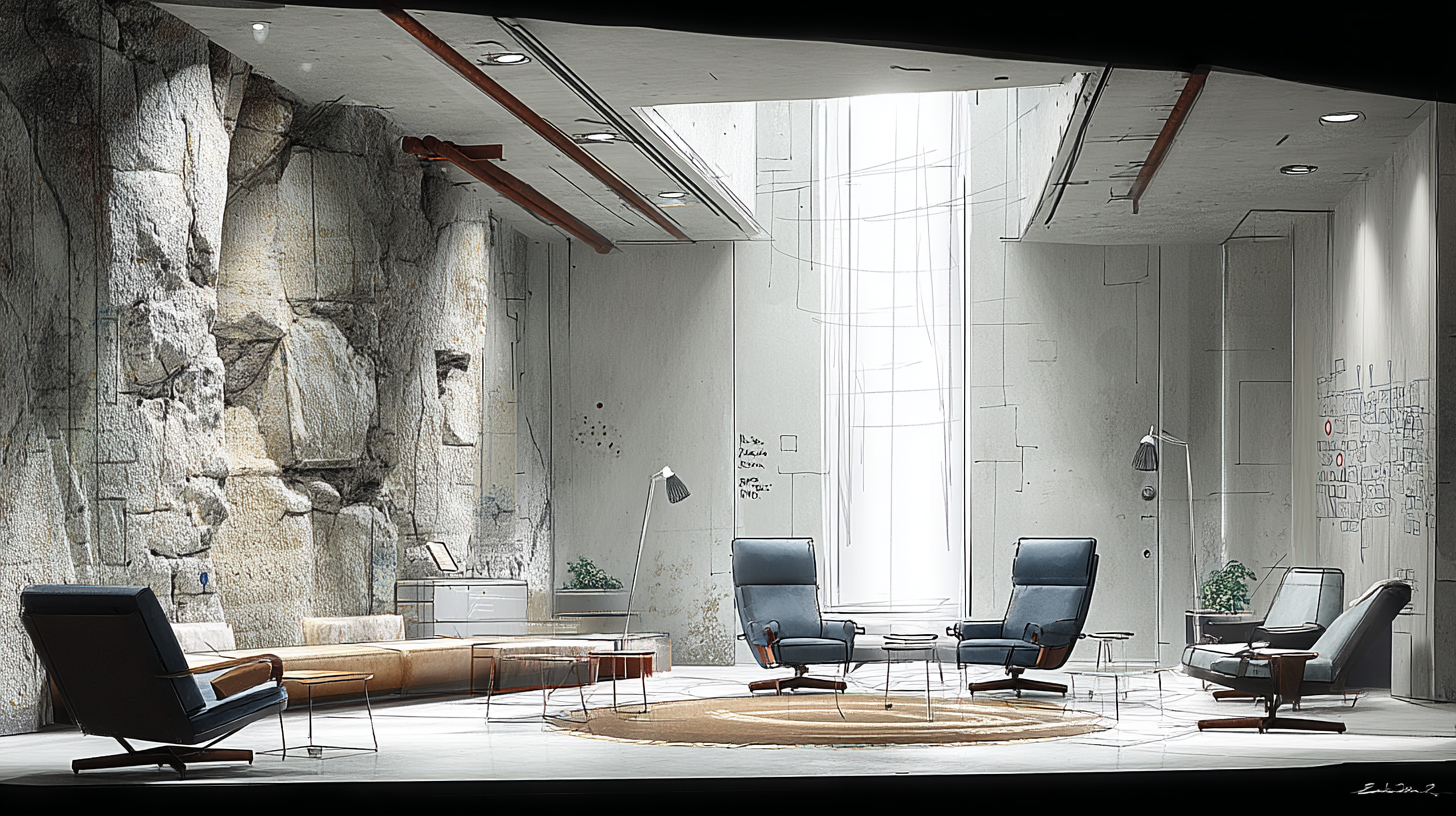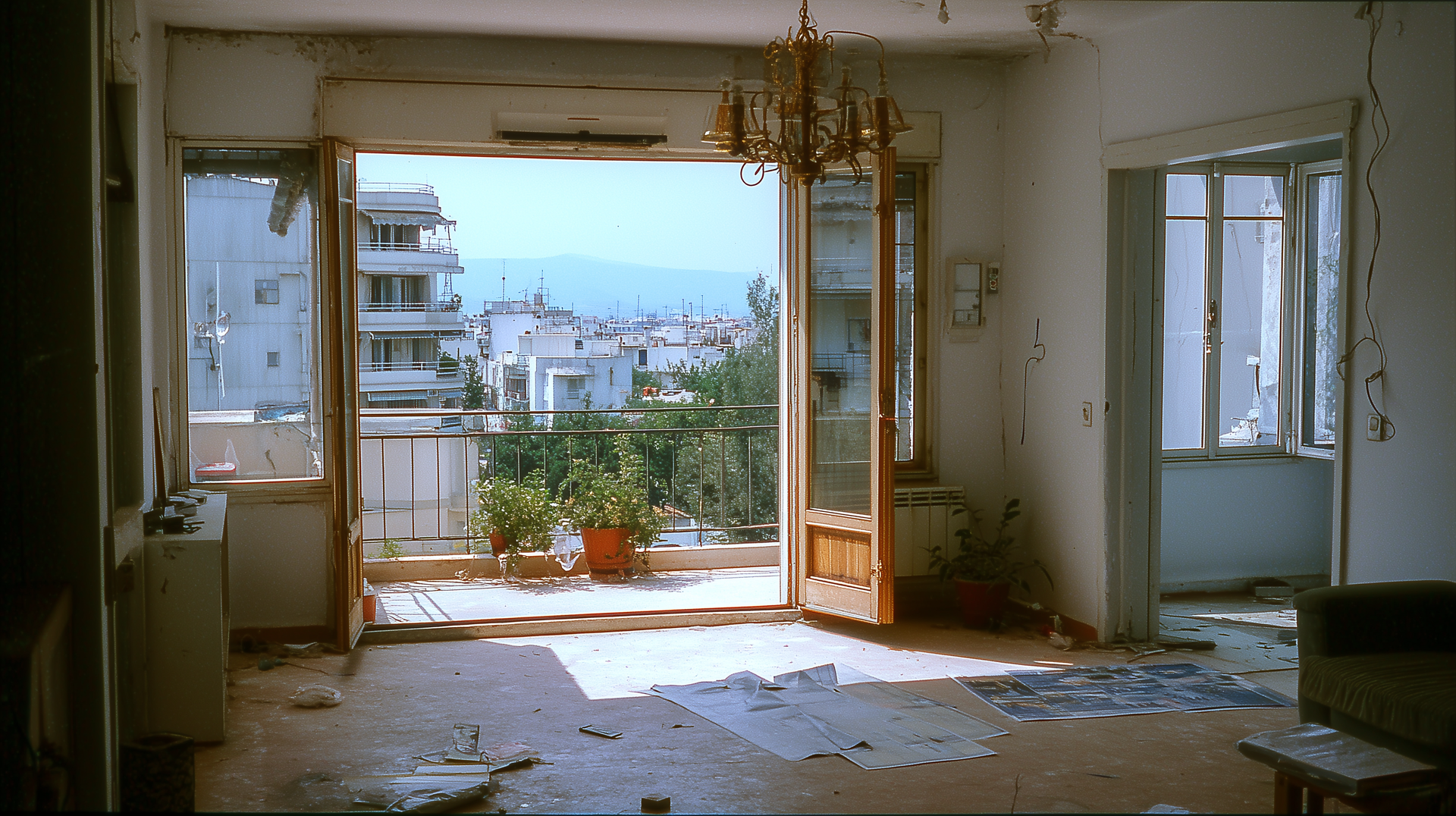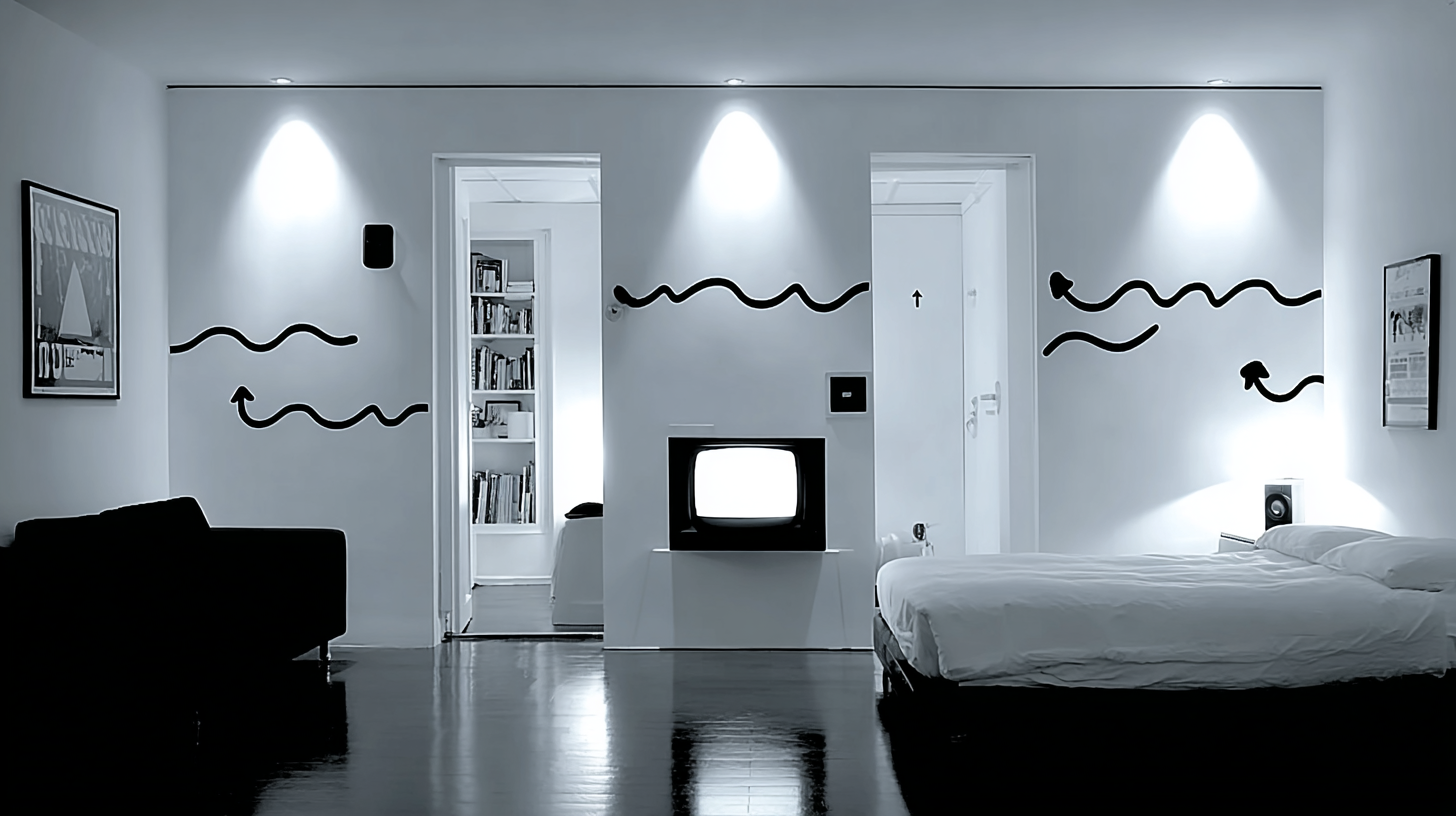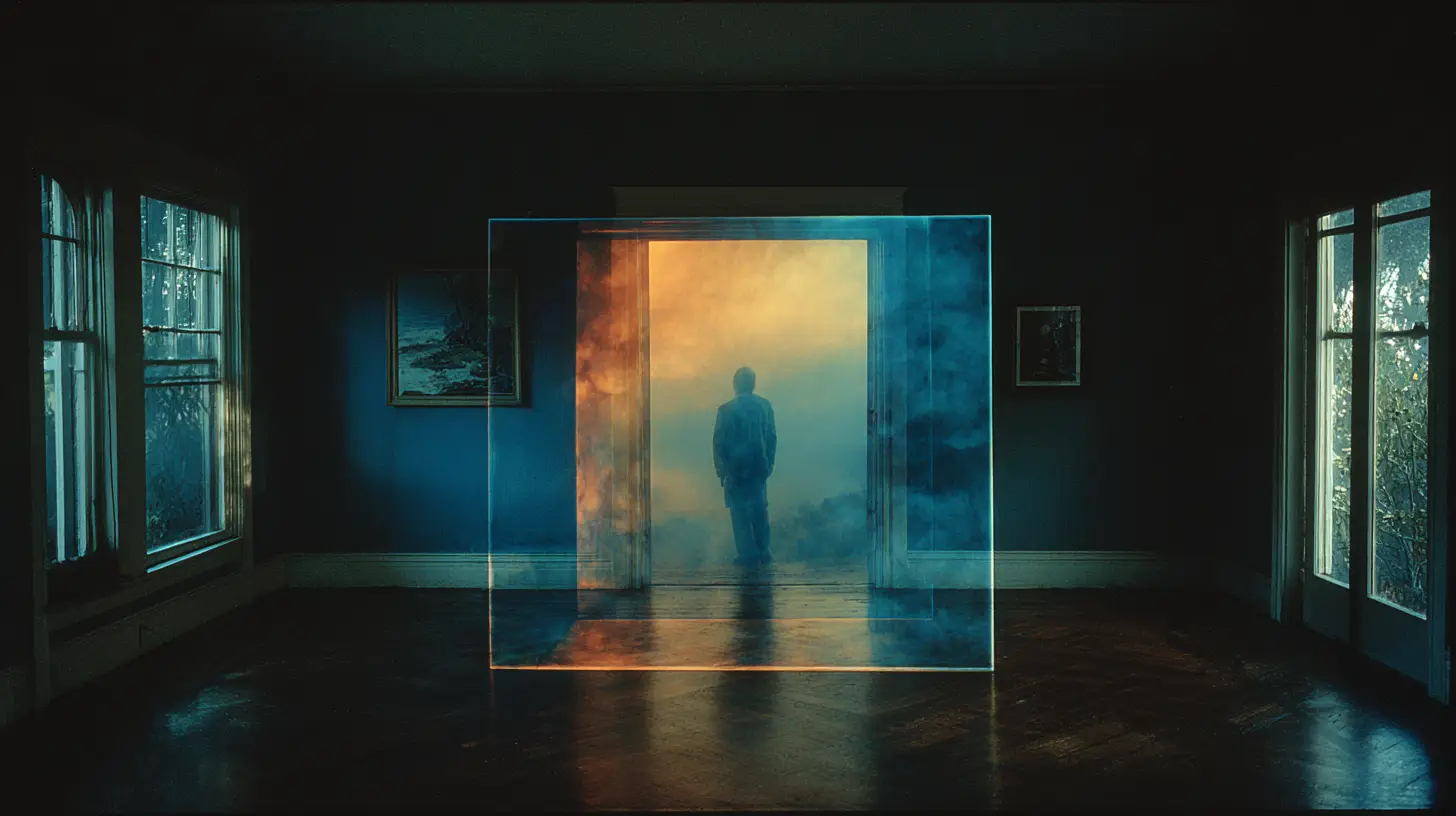
Not technically. Not aesthetically. Philosophically. We start from the wrong end, and then wonder why the result does not feel like our own.
Written by
MOVA Studio · Architecture & Interior Design
An Athens-based studio shaping spaces where architecture, interior design and craft meet — notes from our practice.
We scan catalogs. We scroll through Instagram. We ask what is "currently in fashion." And so we make decisions that we will live within for decades—decisions borrowed from others, installed in the most intimate part of our lives. We purchase exteriority and call it home.
And then something strange happens. The renovation is finished, you sit on the new sofa, you look at the freshly painted walls, and you feel, subtly but steadily, that you are not exactly home.
Freud had a name for this sensation: Unheimliche. The uncanny. That which is simultaneously familiar and foreign; that which should contain you but instead excludes you. It is one of the most unsettling human experiences, precisely because you cannot explain it to anyone without sounding ungrateful. You renovated. The house looks beautiful. Why do you not feel well inside it?
Because you didn't renovate. You wore a disguise.
Why a Painter Has Something to Tell You About Your Living Room
You might wonder what an abstract painter has to do with your home. The answer is: more than any architect you could think of.
Wassily Kandinsky was not just a painter. He was the man who taught at the Bauhaus, the school that redesigned how we think about space in the 20th century—how every choice in a room affects the person inhabiting it. He was the man who wrote a systematic theory on how color alters how you feel, not as an aesthetic opinion, but as a psychological proposition. And he was the man who believed that every creation, from a painting to a room, must spring from a true internal need, rather than from fashion, the market, or the praise of others.
What he called innere Notwendigkeit—inner necessity—is not an aesthetic preference. It is an ethical position. And if you apply it to renovation, the order of questions is completely overturned. You don’t ask "which color do I like most." You ask: what kind of person am I, and what kind of space does this person need to truly live?
If you don't know the answer, you aren't ready to choose anything.
Your Home Is a Map of Your Soul
There is no documented evidence that Kandinsky and Carl Jung had direct contact, yet they moved within the same intellectual climate of early 20th-century Central Europe, sharing the conviction that beneath the surface of visible reality lies a deeper one that exerts the true influence.
Jung, in Memories, Dreams, Reflections, described a dream of a multi-story house which he interpreted as a map of his own psyche. Based on this interpretation and the wider Jungian framework, one can read the levels of a house as a reflection of the layers of the soul: the basement as that which we hide and do not see but which exerts upward pressure; the ground floor as the way we function daily; the upper floors as our ideals and aspirations.
And if this reading holds any truth, then the house you inhabit is not merely an environment. It is the externalized expression of who you are, or what you refuse to see. A house that is excessively orderly, without a trace of life, may speak of the rigidity one imposes upon themselves. A house in permanent chaos, despite "intentions" for change, may reflect something yet unprocessed. A house filled with objects from other eras and other people may speak of an identity not yet claimed.
This does not mean renovation is psychoanalysis. It means that if you ignore this dimension, you are renovating the house without listening to what it has to tell you.
You Are Not Choosing a Color. You Are Choosing Which Part of Yourself You Will See Every Day.
Every color you install in a space acts upon your psyche in ways that are quiet, steady, and cumulative. Not occasionally, not just when you notice it, but every time your mind relaxes and unconsciously begins to absorb its surroundings.
Kandinsky described it as a physical force: blue deepens, pulls inward, creates silence and distance. Yellow moves outward, agitates, does not allow the mind to settle. Red burns and remains. These are propositions he developed systematically in Über das Geistige in der Kunst, and which modern research in color psychology continues to explore, with results that vary according to cultural and individual contexts.
What remains constant, beyond any research, is the Jungian observation that our intuitive choices often reflect psychic needs we have not yet articulated. Someone who constantly returns to deep, dark colors may be seeking depth and substance, not just style. Someone who chooses light and white everywhere may be seeking clarity or, conversely, may be afraid to let anything be seen.
The question, then, is not "do I like this color." The question is: "what does the fact that I like it tell me?"
A House "Piece-by-Piece" Is Not a Home. It Is an Archive of Unprocessed Experiences.
There is a method of renovation we all recognize because we have all done it. The bathroom changes in 2018. The kitchen in 2021. The living room "at some point." Each time we choose whatever we like in that moment, whatever fits the budget, whatever the contractor suggests.
The result is not a home. It is a chronological archive of tastes that coexist without speaking to one another, but also something deeper: the stratigraphy of the selves we used to be in different phases, without any attempt at their unification.
Jung developed the concept of individuation as a process of psychic wholeness—the journey of realizing and unifying all parts of the self. If we apply this logic to space, a cohesive house is not merely aesthetically pleasing. It is a space that speaks with one voice, reflecting a person who knows, even approximately, who they are.
A cohesive home is not an expensive home. It is an honest home.
Renovate as if You Have Something to Say About Yourself
This is the manifesto: before you open a catalog, before you call a contractor, before you decide anything, sit with one question. Not "what do I want my house to look like," but "what am I, and what does this person need to truly live?"
Do I want a home that calms me or inspires me? One that confirms who I already am or one that challenges me to become something more? Which parts of myself do I want to see every day, and which am I still hiding in the basement?
These questions are not a luxury. They are the only starting point worth having before you begin to change anything. And it is precisely from there that every project we undertake at MOVA begins: not from what is beautiful, but from what is true for you.
Your home is Kandinsky’s canvas and Jung’s soul map simultaneously. The longest-lasting creation in which you have ever participated. It deserves to be treated with the same seriousness as anything that tells the truth about who you are.